
Criminal Court Cases in Schuyler County
Every Schuyler County felony and misdemeanor prosecution is filed in the Circuit Court of the Eighth Judicial Circuit. The same court also receives traffic and ordinance matters filed in circuit court. Illinois does not divide local felony and misdemeanor files between separate district and county clerks. The Schuyler County Circuit Clerk keeps both at one office. This makes the custodian clear, but it does not make a court file the same as an arrest record. A court file begins when a prosecutor files a complaint, information, or indictment.
The clerk records documents, court dates, docket events, financial assessments, judgments, and sentences. The judge decides the case. The State's Attorney files and prosecutes state charges, but the prosecutor is not the public file custodian. Police and the Sheriff keep their own incident and booking records. When the question is whether a charge was filed, dismissed, amended, proved, or sentenced, the Schuyler County court case is the right record.
Schuyler County Court Clerk
Schuyler County concentrates its court records in the historic courthouse at 102 South Congress Street in Rushville. The Circuit Clerk is in Suite 103 and is open weekdays from 8 a.m. to 4 p.m. The office phone is 217-322-4633. A requester can ask for a name search, a plain copy, or a certified document. A certified copy bears the clerk's authentication and is the better choice when an official copy is required.
Schuyler County Circuit Clerk
102 S. Congress St., Suite 103
Rushville, IL 62681
217-322-4633
Monday through Friday, 8 a.m. to 4 p.m.
The clerk lists a $6 record search per name. Copies cost $2 for the first page, 50 cents for each of the next 19 pages, and 25 cents for each later page. A certified document costs $10. Payment rules depend on the service. For court-payable matters at the counter, the office accepts cash, money order, or certified check, not credit or debit cards. Never mail cash.
The Judici court list confirms that Schuyler participates in the service.
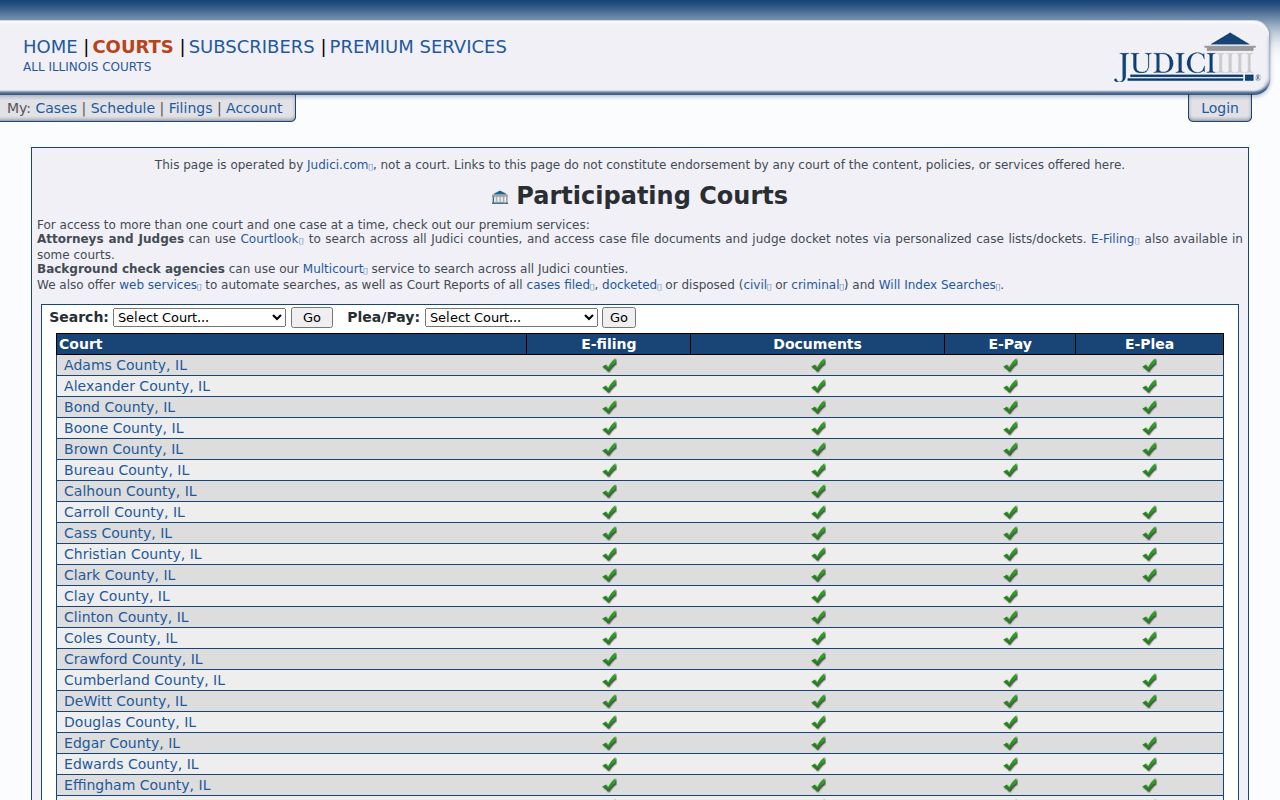
That listing is the official remote route into the county's case data, while Suite 103 remains the source for copies and certification.
Schuyler County Case Record Searches
Start at the Schuyler County Judici search. Basic case information is free, and the documented criminal and civil coverage is current from 1988. Search by a party name or case number. A case number is the strongest key because similar names may lead to the wrong file. If searching by name, begin broad enough to catch a middle-name or spelling variation, then compare all available identifiers before relying on a match.
- Confirm that the selected court is Schuyler County before submitting the query.
- Enter the case number when known, or search the party name with careful spelling variants.
- Open each plausible result and compare the case type, filing date, and identifiers shown.
- Read every count and its docket events through the latest disposition or status entry.
- Ask the Circuit Clerk for the filed order or certified judgment when the result must be authoritative.
Enhanced document access may require a fee or subscription even though basic docket data is free. Judici also uses human verification, so automated access or a blocked screen should not be treated as proof that no case exists.
| Search field | Best use | Check before relying |
|---|---|---|
| Court | Limits the query to Schuyler County | County selection stayed in place |
| Party name | Finds a case without its number | Spelling, middle initial, and result details |
| Case number | Returns a known file directly | Full number and case type |
| Case type or date | Narrows a broad name match | It fits the event being researched |
Note: A name match is a lead, not identity proof; compare the file details and obtain the clerk's record when stakes are high.
Schuyler County Case Dockets
The year 1988 is a practical boundary for online Schuyler County case research. Judici states that the county's criminal and civil cases are current from that year. It does not follow that a person had no earlier case when an online search is blank. Older files may be indexed in a form that requires clerk staff to search the archive, and a spelling change can hide even a newer file.
For a pre-1988 matter, call Suite 103 with the full name, an approximate year, and any known charge or case number. The posted name-search fee gives the clerk a defined route for that work. Narrow dates help in a small office. A request for a particular judgment or docket sheet is also easier to process than a broad demand for every paper tied to a name.
The Judici FAQ explains coverage and access limits.
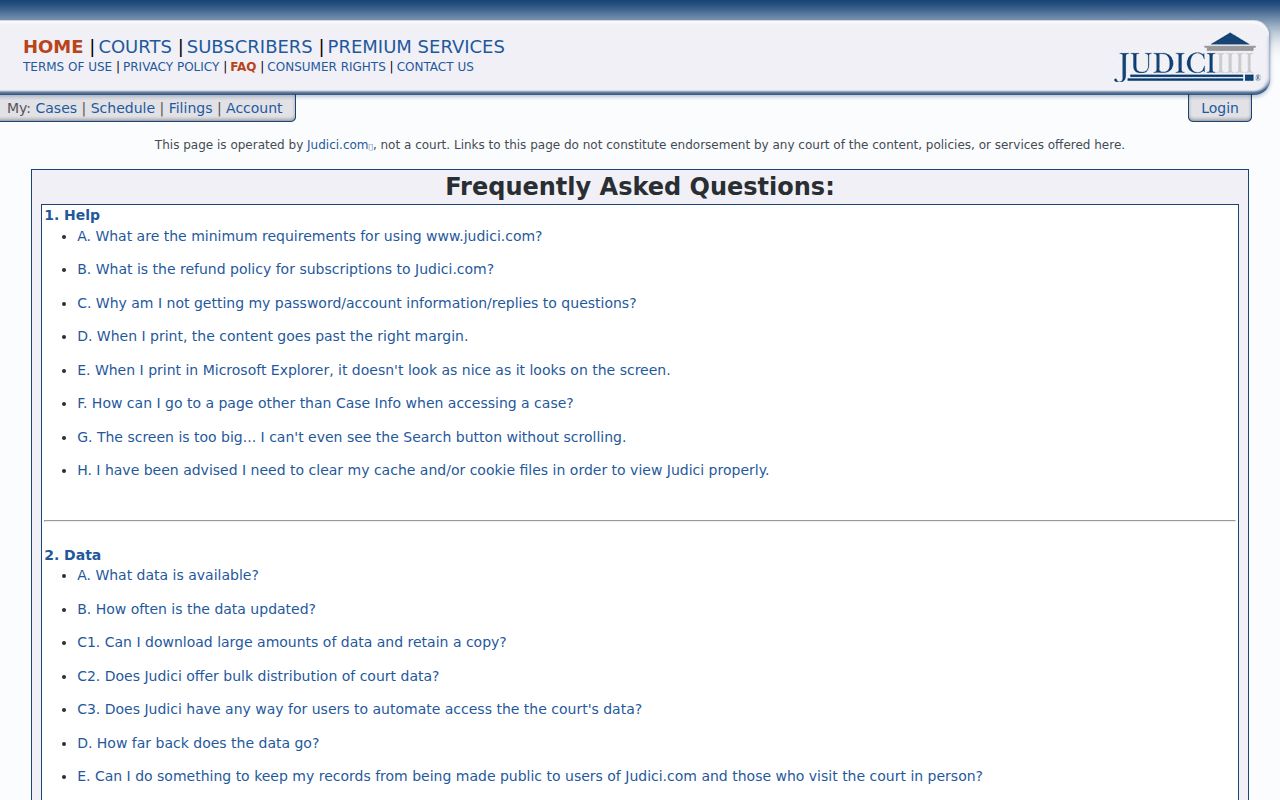
Its guidance helps separate a portal limit from a true finding in the official Schuyler County file.
What a Criminal Case File Contains
A Schuyler County criminal case file is organized by case and docket, not by jail admission. The caption names the parties, but it is not the outcome. One case may contain several counts, and each count can end in a different way. A docket is the dated list of events. A disposition is the result of a count or case. Read the filed judgment when a short screen label is unclear.
| Case Number | The court's unique file identifier and the best key for later requests. |
|---|---|
| Parties and Counsel | The prosecution, defendant, and attorneys recorded in the filed case. |
| Filed Charges | Each prosecutor-filed count and its cited offense, which may differ from the arrest charge. |
| Docket Events | A dated sequence of filings, appearances, motions, notices, and court orders. |
| Hearings | Scheduled and completed appearances, including arraignment and pretrial settings. |
| Disposition | The outcome of each count, such as conviction, dismissal, acquittal, or nolle prosequi. |
| Judgment and Sentence | The court's final ruling, custody or probation terms, assessments, and other conditions. |
“Nolle prosequi” means the prosecutor formally chose not to continue a charge. It is not a conviction. An acquittal is a not-guilty finding. A dismissal also ends a charge without conviction, though the reason and any later filing must be checked in the docket. These terms matter because a search result may display both a filed allegation and the later event that resolved it.
Read Every Schuyler Case Count
A common error is to read the first charge line as the final result. Schuyler County court cases can show an initial complaint, amended counts, a plea to one count, and dismissal of another. The case caption stays visible throughout that sequence. It does not change into a summary of the judgment. Work from oldest docket event to newest, then connect each count to its own outcome.
- Complaint or information
- The filed charging paper that alleges an offense; it is not proof of guilt.
- Arraignment
- The hearing where charges and a plea are addressed.
- Plea agreement
- A negotiated resolution that remains subject to court approval.
- Disposition
- The recorded outcome for a count or the case.
- Concurrent sentence
- Terms served at the same time, unlike consecutive terms served one after another.
If a docket contains several outcomes, order the judgment and any plea or dismissal order needed to resolve the ambiguity. The court record, rather than a booking label or statewide conviction response, shows how Schuyler County handled each filed count.
Criminal Case Stages in Schuyler County
A local criminal file can begin after an investigation and arrest, but the prosecutor's filing starts the court case. The first appearance addresses the case and current release or detention terms. Illinois's Pretrial Fairness Act changed the old cash-bail framework, so current court orders should be read instead of assuming that an older “bond” label controls a new matter.
Case flow: Charges Filed › Arraignment › Pretrial › Plea or Trial › Disposition › Sentencing
Discovery and motions occur during the pretrial phase. A negotiated plea may resolve the file, or the matter may proceed to trial. After judgment, the judge imposes sentence when there is a conviction. Post-judgment motions or an appeal can follow. Probation remains court supervision, while a prison commitment transfers custody to the Illinois Department of Corrections. The docket should be checked again if an appeal or later order may have changed the result.
Schuyler Court Case Access
The small Schuyler County courthouse provides several tools that are useful when remote access falls short. Illinois Courts lists public internet, a copier and printer, an e-filing kiosk, digital recording, and a self-help center in the Circuit Clerk's office. Mobile devices are allowed subject to local court policy. Free street parking is available around the courthouse and the public square.
Language help can be requested from the Circuit Clerk, bailiffs, or judge. The building also has a disability coordinator and a lactation room. These services do not expand which records are public, but they help a reader reach the official file and use the courthouse systems. Call ahead if a large archive pull or an accommodation is needed.
The official Sheriff site shows the separate law-enforcement channel.
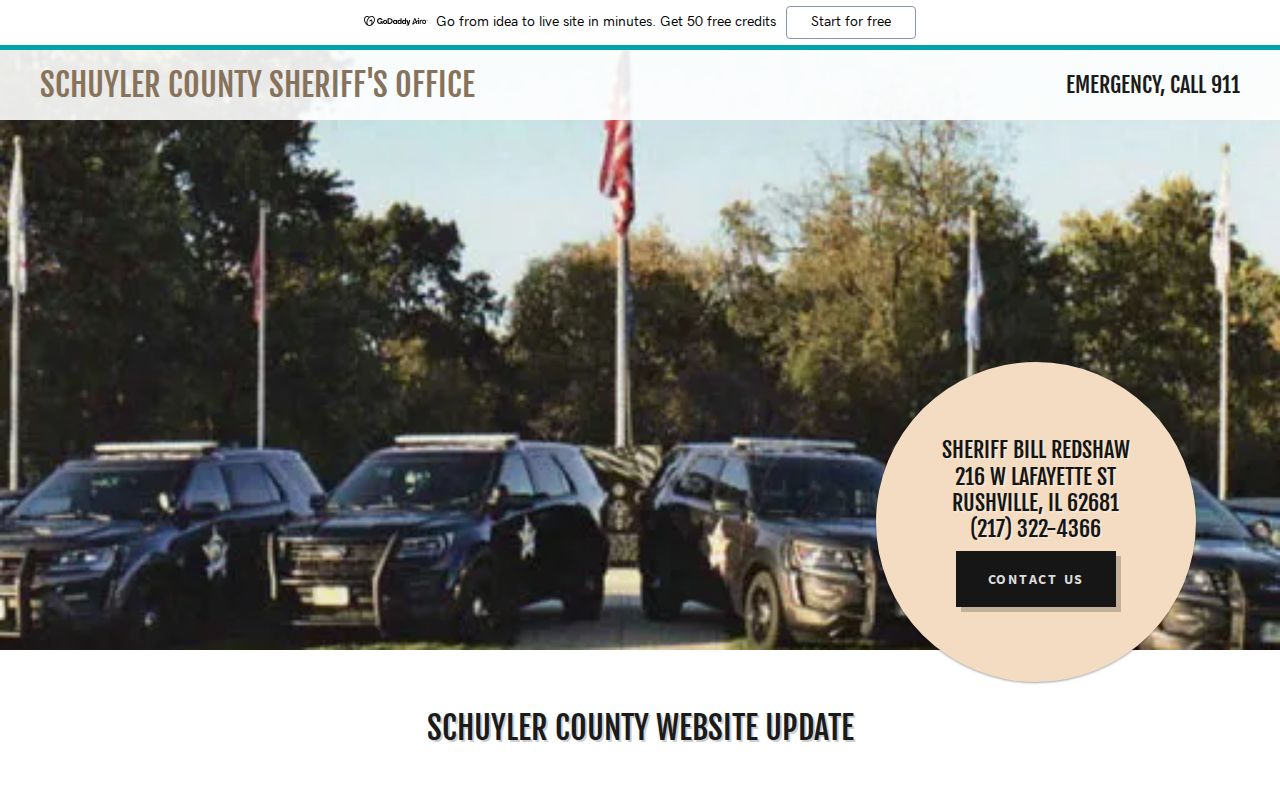
That separation matters: booking and incident records stay with law enforcement, while filed charges and outcomes remain with the clerk.
Access Rules for Case Records
Illinois court access rules govern judicial files. They are distinct from an executive-agency request under the Illinois Freedom of Information Act. Remote displays may omit documents or details that the clerk can provide at the counter. Juvenile matters, sealed or expunged records, protected victim information, and confidential identifiers are not made public merely because another part of a case is open. Active sealing proceedings can also affect what is shown.
The Illinois Supreme Court remote access policy explains why online access may be narrower than the official clerk file. The Circuit Clerk can identify the access route for a specific Schuyler County case.
A statewide public conviction inquiry is a different product. The ISP name-based process supplies public conviction information under UCIA, not the full Schuyler County docket.
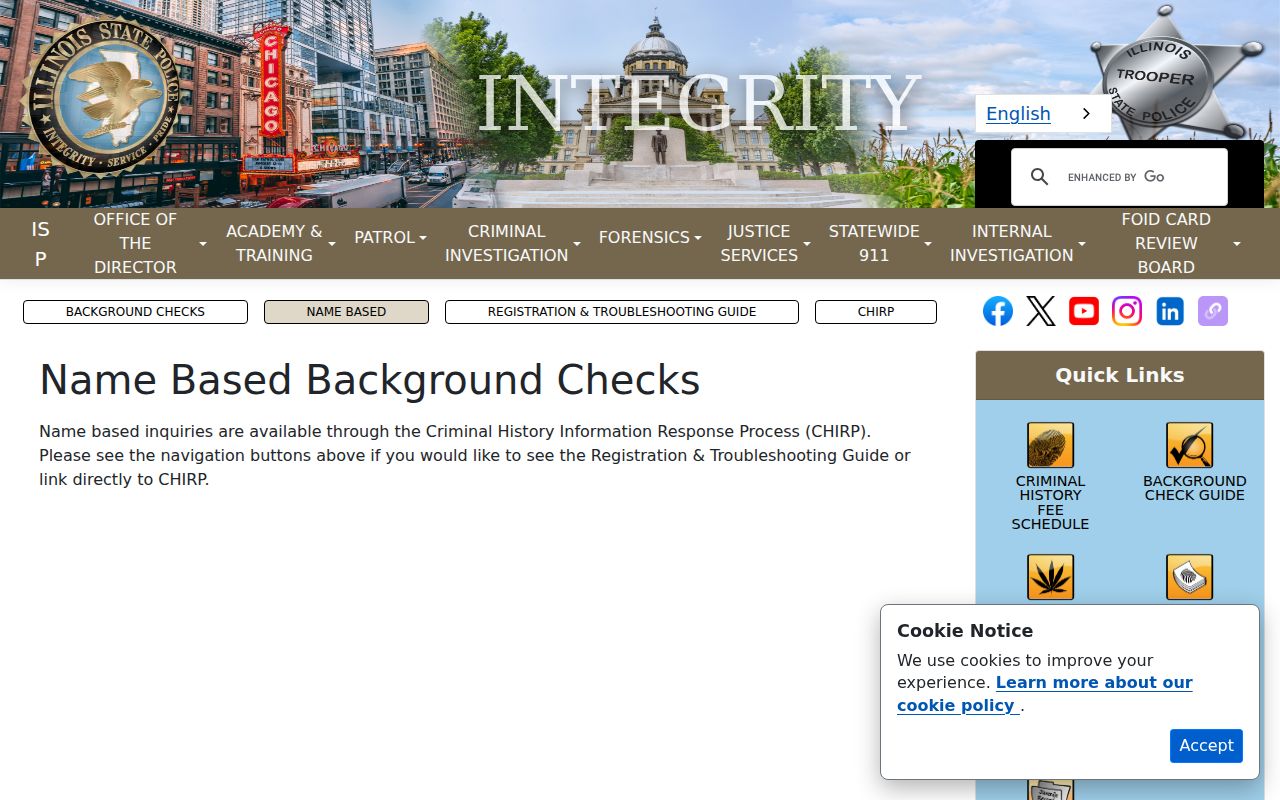
Use it for the state conviction question, but return to Judici and the clerk for motions, dismissed counts, and the filed judgment.